

2027: Peter Obi Vows Emergency Action on Corruption, Power Crisis if Elected
The NDC presidential candidate pledges emergency measures on corruption, education and electricity if elected in 2027, while promising stronger security and accountability
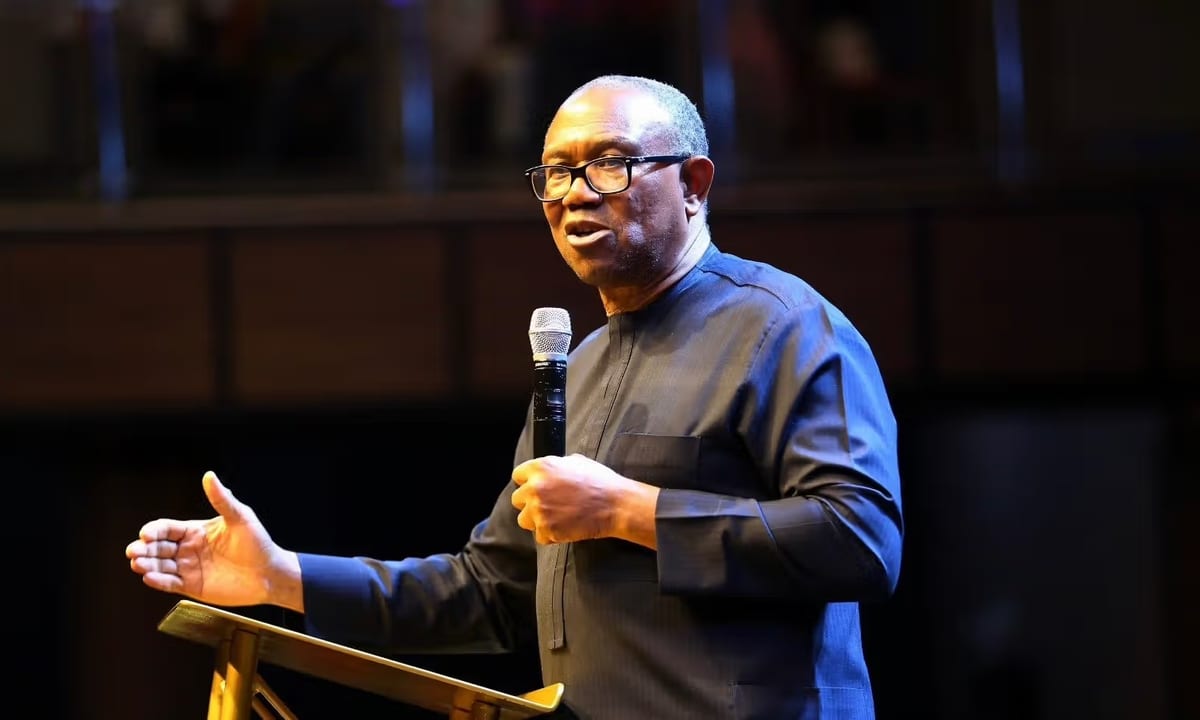
Former Anambra State Governor and Nigeria Democratic Congress (NDC) presidential candidate, Peter Obi, has pledged to declare an immediate state of emergency on corruption, education and electricity generation if elected president in 2027, promising sweeping reforms in security, healthcare and public spending during a town hall meeting in Enugu State on Thursday, October 29, 2026.
Also read: Nigeria Looks Ahead to the 2027 Elections
Obi made the commitments while addressing supporters during his nationwide engagement tour ahead of the 2027 general election.
He said Nigeria needed leadership driven by competence, accountability and a willingness to confront the country’s longstanding challenges directly.
The former governor maintained that the presidency demanded physical stamina, personal commitment and close engagement with citizens, arguing that national security and economic recovery required more than promises from political leaders.
“This job requires energy. As President of Nigeria, I will unite Nigeria, secure Nigeria and deal decisively with insecurity,” Obi said.
He pledged to take a direct role in efforts to tackle kidnapping and other security threats, insisting that the government must demonstrate a stronger commitment to protecting citizens.
“I will not be president, and somebody will kidnap our children; we will enter the bush together. If there is a general bush, I will be in that bush with them,” he said.
Obi’s security pledge comes amid continuing concerns about kidnappings, armed attacks and the safety of communities across several parts of Nigeria.
His proposed approach places emphasis on visible presidential leadership, although details of the operational measures and resources required to implement the commitment were not outlined in the remarks provided.
On corruption, the NDC candidate promised stricter accountability for public funds, arguing that government borrowing and expenditure must be transparent and directed towards measurable public benefits.
“As president of Nigeria, we will declare an emergency on corruption. People must stop stealing public money. Public money must be used for the public good,” Obi said during a separate engagement reported by Daily Post.
He added that his administration would make information about government borrowing accessible to Nigerians, including the purpose for which loans were obtained and how the funds were spent.
“We will be accountable; we will be open. If we borrow money, you will know what the money is being borrowed for,” he said.
The proposed emergency measures would also extend to education, with Obi promising to prioritise improvements in the sector and expand access to healthcare.
He said primary healthcare centres would be established in every ward across the country, a proposal intended to bring essential medical services closer to communities and reduce the burden on larger hospitals.
On electricity, Obi pledged that Nigeria would generate, transmit and distribute at least 10,000 megawatts of power, arguing that reliable electricity was essential for industrial expansion, employment and economic productivity.
“As President, I have said we will generate, transmit and distribute at least 10,000 megawatts of electricity because we want industrial work,” he said.
The target would require improvements across the electricity value chain, including generation capacity, transmission infrastructure and distribution networks.
Nigeria’s power sector has long faced challenges involving inadequate supply, infrastructure constraints and funding requirements.
Obi also criticised the current administration over government expenditure, foreign borrowing and President Bola Ahmed Tinubu’s overseas travels, challenging the President to explain the practical benefits of his administration’s decisions to ordinary Nigerians.
“Our president has travelled out of this country over 350 times. Now we are asking him, please spend at least 36 days and go round Nigeria and tell the people what you have been doing for the past three years,” Obi said.
He further demanded an account of public funds and the results achieved through government borrowing, urging political leaders to explain their records directly to citizens.
The former governor also challenged other presidential candidates to embark on nationwide engagements and present their programmes to voters rather than relying solely on campaign statements and distant political platforms.
Obi urged Nigerians to assess candidates on competence, capacity and their proposed solutions to national problems, rather than ethnic or regional identity.
“Do not vote for me because I am Igbo; vote for me because I am the most qualified to be president,” he said.
He described his broader ambition as building a country in which children could achieve their potential regardless of their family background, while shifting the economy away from dependence on consumption towards productive activity.
“We will build a society where the child of nobody will become somebody. We must move Nigeria from consumption to production,” Obi said.
His remarks echoed the themes of his previous town hall engagements, including a meeting in Akwanga, Nasarawa State, where he and his running mate, Senator Rabiu Musa Kwankwaso, discussed security, education, healthcare, the cost of living and government borrowing with residents.
The Enugu gathering also featured comments from prominent supporters of the NDC ticket, who called for greater citizen participation in the 2027 elections.
Renowned economist and political activist Professor Pat Utomi said Nigeria could become a better place to live if the country elected leaders committed to meaningful change.
“Our country will become one of the greatest places to live.
The time is now for genuine change to happen. We need to ensure that people come out massively, vote and defend their votes,” Utomi said.
Senator Victor Umeh, who represents Anambra Central, endorsed the Obi-Kwankwaso ticket and expressed confidence in the candidates’ ability to address Nigeria’s challenges.
“Obi and Kwankwaso are the best ticket; they are ready to serve. They have the wisdom and commitment to change Nigeria for the better,” Umeh said.
He also praised Kwankwaso for helping to mobilise support in northern Nigeria, arguing that cooperation across regional lines would be important to the party’s campaign.
Earlier, the NDC governorship candidate in Enugu State, Chinyeaka Ohaa, said the party’s message extended beyond the prospect of an Igbo president to a broader vision of national unity, accountability and shared prosperity.
“It is not about an Igbo president but about building a new Nigeria that works for everyone. Obi represents the hope of many Nigerians. And our people are solidly behind him,” Ohaa said.
Ohaa recalled discussions with Kwankwaso in the United Kingdom in 2024 about the possibility of a renewed political understanding between communities across the Niger.
He compared the proposed partnership to the historical cooperation between Dr Nnamdi Azikiwe’s National Council of Nigeria and the Cameroons and Sir Ahmadu Bello’s Northern People’s Congress.
He said the Obi-Kwankwaso partnership offered an opportunity to build stronger political cooperation across the country’s regions.
“The handshake across the Niger must become a bridge across Nigeria, a bridge of unity, mutual respect and shared destiny,” Ohaa said.
The NDC’s nationwide mobilisation has also encountered logistical challenges. Ahead of the Enugu engagement, organisers reported that Amadeo Event Centre had withdrawn permission for the planned gathering.
The venue’s management subsequently said the booking terms had been breached when political-party decoration materials were brought to the premises, adding that it later allowed the event to proceed as a youth town hall meeting.
Enugu State Governor Peter Mbah denied directing the venue to reject the event.
The episode highlighted the practical challenges facing opposition parties as they organise public engagements ahead of the next election, although the available reports do not establish that the governor was responsible for the venue’s initial decision.
Obi’s latest pledges now place corruption, security, education, healthcare and electricity at the centre of his emerging campaign message.
The proposals set out broad objectives, but their implementation would depend on detailed policies, funding arrangements, institutional capacity and cooperation across the federal and state governments.
As the 2027 election approaches, the commitments are likely to form part of the wider debate over how presidential candidates intend to address Nigeria’s economic and security challenges.
Also read: VIDEO: Tinubu Arrives in Saudi Arabia for Umrah Pilgrimage
Voters will have the opportunity to assess the proposals alongside the candidates’ records, policy details and plans for delivering measurable results.


Pingback: INEC Clears Pantami, Gwarzo but Rejects Adebutu’s Appeal – FreshUpdates News
Pingback: Abba Atiku Backs Tinubu, Vows to Deliver Adamawa for APC – FreshUpdates News