

FG Unveils Bold Plan to Release Grains, Cut Food Prices
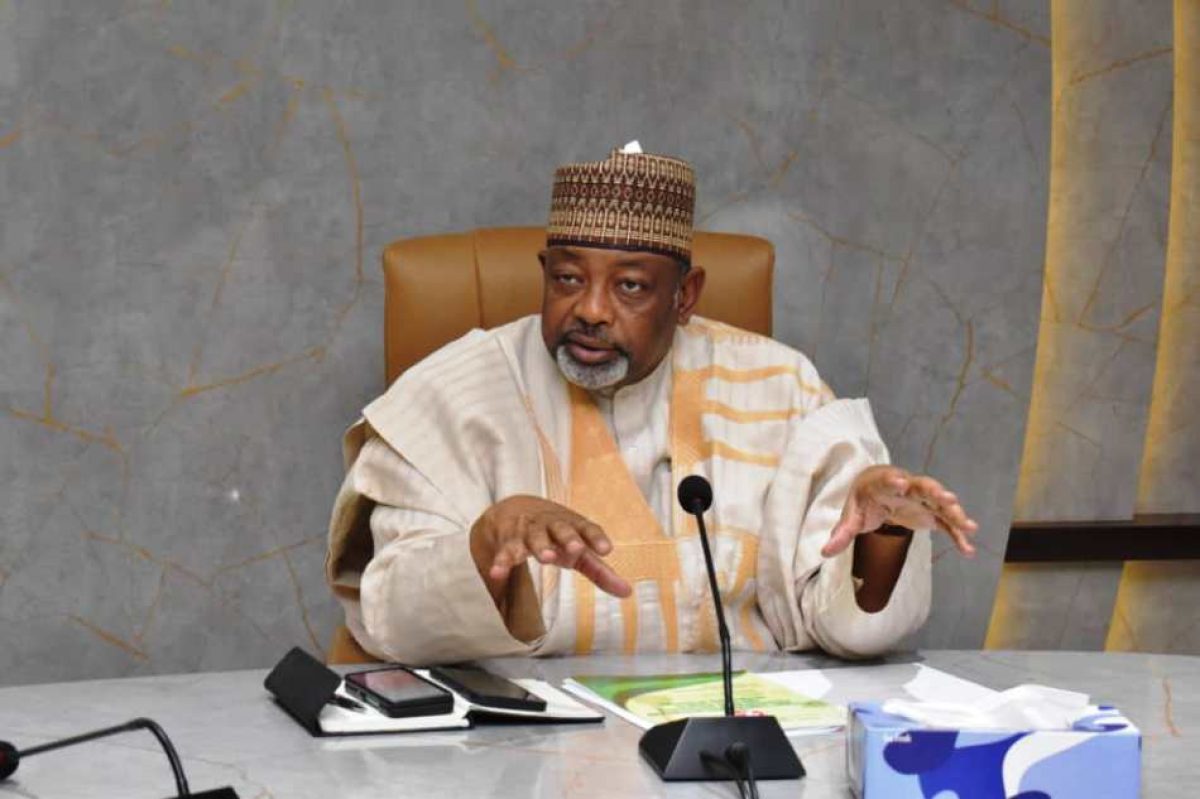
Agriculture Minister Abubakar Kyari says the government will release grains held under the Bank of Agriculture’s price-support programme and distribute three million bags of fertiliser to boost food supply and ease pressure on consumers
The Federal Government has announced plans to release grains held under the Bank of Agriculture’s Guaranteed Minimum Price programme into the Nigerian market, alongside the distribution of three million bags of fertiliser, in a fresh effort to strengthen food supply and ease the cost of living.
Also read: FG Orders 3-Month Recovery of Excess University Allowances
Minister of Agriculture and Food Security, Abubakar Kyari, announced the measures in Abuja on Wednesday, November 18, 2026, during the presentation of the 2026 Wet Season Agricultural Performance Survey Report, saying the interventions were designed to stabilise commodity prices while protecting farmers’ incomes.
Kyari said the government would soon make stored agricultural produce available to the market, although the quantity of grains to be released and the distribution timetable were yet to be announced.
“The same crops that we have that were stored under the guaranteed minimum price programme under the Bank of Agriculture will be released very soon to stabilise the market prices,” the minister said.
The Guaranteed Minimum Price programme allows the government to purchase selected agricultural commodities from farmers at an agreed price, providing a market for their produce while helping to prevent distress sales during periods of excess supply.
The planned release is expected to increase the volume of grains available to traders and consumers. However, its actual impact on retail prices will depend on the quantity released, distribution arrangements, transportation costs and how quickly the commodities reach local markets.
Kyari said the government was also working to reduce farmers’ production expenses through improved access to fertiliser, financing and mechanised farming equipment.
He disclosed that the Presidential Fertiliser Initiative was preparing to make three million bags of fertiliser available within the next month, following an intervention by Vice-President Kashim Shettima.
The fertiliser programme is expected to support farmers preparing for dry-season cultivation and encourage increased agricultural production.
Shettima had, on Tuesday, November 17, directed relevant government agencies and industry stakeholders to accelerate the production and release of more than three million bags of fertiliser ahead of the next farming season.
At a meeting with fertiliser industry representatives at the Presidential Villa, the Fertiliser Producers and Suppliers Association of Nigeria disclosed that available raw materials could support the production of approximately three million bags of NPK fertiliser within weeks.
The association’s president, Abubakar Sadiq Kassim, said its members already held about 29,000 metric tonnes of finished NPK fertiliser that could be purchased and distributed immediately.
Vice-President Shettima said the intervention was also intended to revive domestic fertiliser production and restore economic activities across the agricultural supply chain.
“Revitalising Nigeria’s fertiliser industry would strengthen agricultural productivity while creating jobs and supporting rural livelihoods,” he said.
The government has also approved the Bank of Agriculture and Bank of Industry as fund administrators and financial intermediaries for the fertiliser intervention, while the Office of the National Security Adviser is expected to monitor declared stocks and distribution arrangements.
Beyond fertiliser supply, Kyari identified the National Agricultural Development Fund and the recapitalisation of the Bank of Agriculture as important measures for improving farmers’ access to affordable financing.
He maintained that expanded cultivation, better access to agricultural inputs and increased productivity would gradually reduce pressure on food prices.
The minister also attributed part of the expansion in cultivated farmland to improved security in some farming communities, explaining that military operations had enabled farmers to return to previously inaccessible agricultural areas.
On mechanisation, Kyari disclosed that the Federal Government had deployed 2,000 tractors, with additional deliveries under the second phase of the programme expected within two to three months.
The government is also seeking to attract private investment into agricultural processing and value addition, particularly in cocoa, sesame, cassava and cashew production.
Kyari disclosed that Nigeria had signed a $33m investment agreement with a Turkish company for greenhouse projects under the country’s Special Agro-Industrial Processing Zones programme.
The investment is expected to support controlled-environment agriculture and strengthen the country’s agricultural production and processing capacity.
Meanwhile, the 2026 Wet Season Agricultural Performance Survey presented at the event offered a positive outlook for domestic food production.
Executive Director of the National Agricultural Extension and Research Liaison Services at Ahmadu Bello University, Zaria, Yusuf Sani, said production of 13 out of the 17 major crops assessed was projected to increase in 2026.
According to Sani, 19 multidisciplinary teams conducted field assessments across Nigeria’s 36 states and the Federal Capital Territory between August 31 and September 6, 2026.
The exercise involved state ministries of agriculture, agricultural research institutes, Agricultural Development Programmes and development partners.
The findings identified Niger State as the country’s leading rice producer, Kano State as the largest producer of sorghum and Yobe State as the leading millet-producing state.
Despite the projected production gains, Sani stressed the importance of improving storage infrastructure, post-harvest handling and access to markets to reduce losses and ensure that increased farm output translates into greater food availability.
Kyari, however, clarified that the survey covered only wet-season agricultural production. A separate dry-season assessment had been commissioned to establish Nigeria’s overall agricultural output for 2026.
The government’s latest interventions come against the background of persistent food affordability challenges, despite recent improvements in some monthly inflation indicators.
The National Bureau of Statistics’ October 2026 Consumer Price Index report, released on Monday, November 16, showed that annual food inflation declined to 19.13 per cent from 19.59 per cent in September.
However, the October figure remained higher than the 16.30 per cent recorded in the corresponding period of 2025, indicating that the annual increase in food prices remained significant.
On a month-on-month basis, food prices declined by 0.75 per cent in October, following a larger reduction of 1.55 per cent in September. This indicated that average food prices continued to fall, although the pace of the decline slowed.
Nigeria’s headline inflation also moderated to 14.06 per cent in October from 14.63 per cent in September, although monthly headline inflation increased to 0.43 per cent from 0.06 per cent.
The figures underline the difference between a slowdown in inflation and a sustained reduction in the cost of living. Although some food prices have declined in recent months, households continue to face higher costs than they did a year earlier.
The proposed grain release and fertiliser distribution could provide additional support to the food supply chain, but the effectiveness of the measures will depend largely on transparent implementation, timely delivery and access for genuine farmers and consumers.
Also read: FG Signs Port Harcourt Airport Deal, Assures Workers
The announcement therefore places renewed attention on the government’s ability to translate improved agricultural production into affordable food prices, stronger rural livelihoods and more reliable food security across the country.



