

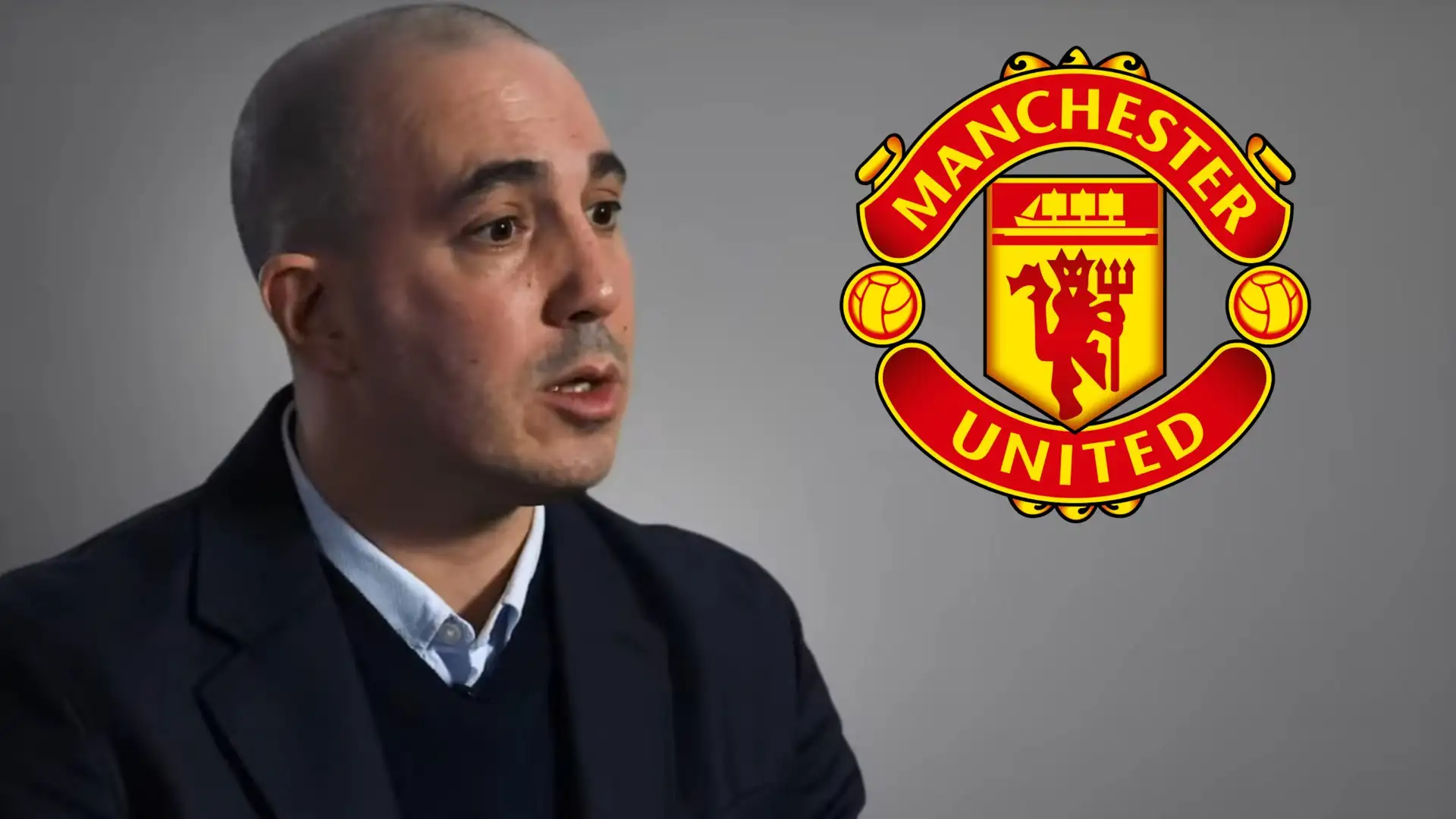
Man Utd CEO Omar Berrada Fires Back at Critics as Man Utd Sink to 18th
Manchester United chief executive Omar Berrada acknowledges supporters’ frustration over the club’s poor Premier League form but says some criticism of the hierarchy has crossed the line
Manchester United chief executive Omar Berrada has defended the club’s leadership against growing criticism from supporters, acknowledging that some complaints are justified but arguing that sections of the backlash have gone too far.
Also read: Palmer Returns as Chelsea Name Strong XI Against Man Utd
Berrada made the remarks during a rare interview with Sky Sports journalist Patrick Davison on Friday, November 20, 2026, as Manchester United struggle in the Premier League, where they sit 18th and face increasing pressure to turn around their disappointing campaign.
The interview comes amid growing dissatisfaction with the club’s ownership, recruitment strategy and frequent changes in the coaching department, with supporters directing much of their frustration at Berrada, director of football Jason Wilcox and minority owner Sir Jim Ratcliffe.
The Glazer family, who have retained control of the club following their partnership with Ratcliffe’s INEOS group, have also remained a major target of fan protests.
Responding to the criticism, Berrada said the club understood the scrutiny that came with its leadership responsibilities but believed some commentary was motivated more by social media engagement than genuine concerns about Manchester United.
“Being in this position comes naturally with the criticism and scrutiny we’re going to get. We accept it. Some of it is fair, some of it does cross the line,” he said.
He added that social media had contributed to an increasingly hostile atmosphere around the club, with some individuals deliberately circulating negative stories to generate attention and engagement.
However, Berrada acknowledged that the club had not delivered the consistency supporters expected, admitting that Manchester United had failed to achieve the stability required after appointing and dismissing three permanent head coaches in less than three seasons.
Erik ten Hag, Ruben Amorim and Michael Carrick have all left the position during that period, highlighting the continuing challenges facing the club’s football leadership.
Berrada accepted that the hierarchy must take responsibility for improving performances, while insisting that players and coaches also have obligations to deliver results.
He said the ultimate objective remained building a team capable of competing consistently for major honours.
The chief executive also defended the club’s ownership structure, insisting that the Glazer family and Ratcliffe’s INEOS group maintained a good working relationship despite the criticism surrounding their involvement.
According to Berrada, both ownership groups remained aligned on the club’s ambitions and maintained regular communication over important decisions.
The pressure on United’s leadership has also intensified following questions about the club’s summer recruitment, particularly the decision to prioritise midfield reinforcements while leaving concerns over the defence largely unresolved.
Berrada, however, defended the transfer strategy, saying the club was satisfied with the players recruited during the 2026 summer window.
He identified Carlos Baleba, Youri Tielemans, Andrey Santos and goalkeeper Karl Darlow as important additions, while also pointing to Marcus Rashford’s return following his loan spell at Barcelona.
According to Sky Sports, Manchester United spent approximately £163m on new players during the summer window, with much of the investment directed towards strengthening the midfield.
Berrada explained that the club had considered signing another defender but was unwilling to commit substantial transfer fees to players who might not represent genuine improvements.
He said Manchester United had to remain financially disciplined while ensuring that recruitment decisions addressed the squad’s most pressing needs.
The chief executive also acknowledged that injuries to key defenders, including Matthijs de Ligt and Luke Shaw, had complicated the team’s defensive situation.
Meanwhile, new head coach Mauricio Pochettino has signalled his intention to have greater involvement in Manchester United’s football decisions, particularly squad planning and future recruitment.
The Argentine, who officially took charge on Wednesday, November 18, following Carrick’s dismissal, said he would take responsibility for selecting the starting XI and making substitutions but wanted to participate in broader decisions affecting the first team.
Speaking ahead of his first match against Liverpool on Sunday, Pochettino stressed the importance of communication and cooperation between the coaching department and the club’s recruitment leadership.
He said: “I know that being a head coach I am the guy that is going to decide tomorrow the squad for Sunday and I’m going to pick the starting XI.
I’m going to make the changes, and of course in the future I would like to be involved in all the main decisions that will happen on the squad.”
His comments suggest that recruitment responsibilities and the relationship between the coaching department and Wilcox could become important issues as United attempt to rebuild.
Pochettino’s appointment follows a difficult opening to the campaign under Carrick, with the club’s poor results prompting another mid-season managerial change.
Berrada has expressed confidence in the Argentine’s ability to restore stability, describing his energy, experience and football philosophy as qualities that could help improve the team’s performances.
The immediate challenge, however, is considerable. Manchester United are 18th in the Premier League table and face a difficult away fixture against Liverpool at Anfield on Sunday.
The encounter will provide Pochettino with his first opportunity to demonstrate the direction he intends to take the struggling side.
For United’s hierarchy, the challenge extends beyond appointing another head coach or signing new players. Restoring supporters’ confidence will ultimately depend on improved performances, consistent decision-making and a sustained return to competing for major trophies.
Also read: Aston Villa Threaten Legal Action Against Jamie Carragher
Berrada insists the club is laying the foundations for that recovery, but with frustration continuing to grow among supporters, the leadership will face increasing pressure to translate its promises into results.




Pingback: Barcelona Stage Stunning 3-2 Comeback Against Villarreal – FreshUpdates News