

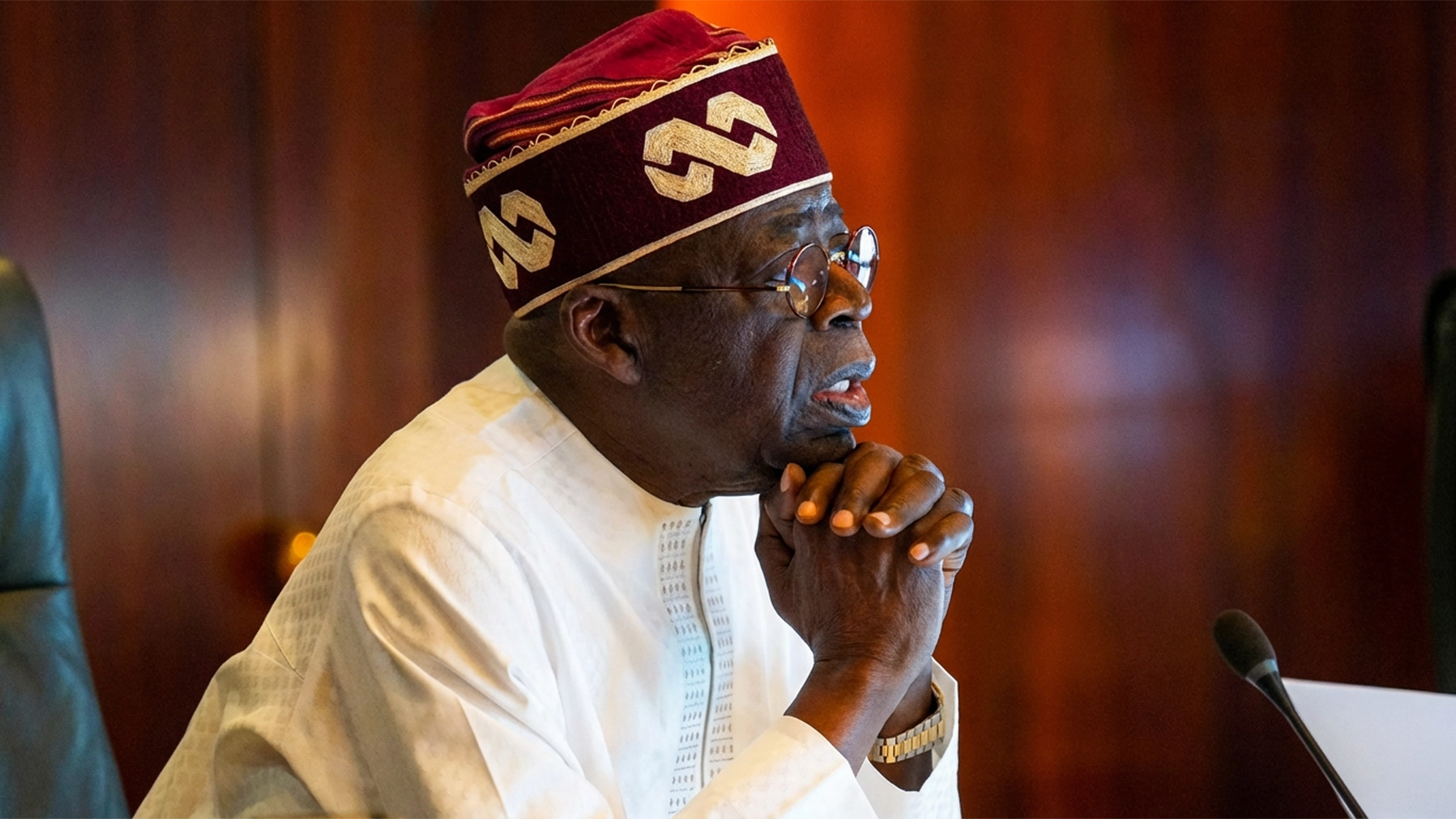
Tinubu Unveils 40% Transport Fare Reduction Plan, 300 New CNG Buses
The President says the proposed 2027–2031 initiative will expand affordable CNG bus services, while China’s Yutong plans to establish an assembly plant in Ibadan and supply an initial 300 buses
President Bola Ahmed Tinubu has promised to reduce transportation fares by approximately 40 per cent on participating routes between 2027 and 2031, while announcing plans by Chinese bus manufacturer Yutong to establish a compressed natural gas (CNG) bus assembly plant in Ibadan, Oyo State.
Also read: Tinubu Expands 2027 Campaign Tour to 19 States
Tinubu disclosed the commitments in a personally signed statement on Thursday, November 19, 2026, outlining his administration’s plans under the Reforms to Prosperity Agenda for 2027–2031.
The President said the proposed reduction was aimed at easing the financial pressure on workers, traders, students and families who spend a significant portion of their income commuting.
Acknowledging the hardship caused by rising transport costs, Tinubu said his administration was determined to ensure that Nigerians retained more of their earnings to meet household needs.
“I know the burden of transport fares and how much less you have left for your family when you return home. It is a burden I am determined to ease,” he said.
As part of the proposed intervention, the President announced that Yutong, which he described as the world’s largest bus manufacturer, would establish a CNG bus assembly plant at the former Leyland automotive facility in Ibadan.
Under an agreement with the Presidential Initiative on CNG and Electric Vehicles, the company is expected to supply an initial 300 buses for the National Affordable CNG Transit Programme.
Tinubu said the first 100 buses could arrive as early as December 2026, while subsequent units would be assembled locally through YP Automobiles.
He added that the arrangement would create employment opportunities for Nigerian engineers, technicians and other workers while strengthening local capacity in the automotive industry.
The President also said the CNG transport initiative was already recording encouraging results in at least 10 states and the Federal Capital Territory, with some routes offering significantly reduced fares and others providing free transportation.
Citing Enugu State, Tinubu said commuters travelling between Enugu and Nsukka could now pay as little as N1,600 on participating CNG buses, compared with previous fares of up to N4,000.
He also highlighted N50 bus rides in Borno State and free CNG-powered bus services in Kaduna, describing them as examples of how alternative energy could make public transportation more affordable.
“There are N50 bus rides in Borno and free CNG bus services in Kaduna. More Nigerians deserve to experience this,” he said.
The latest announcement builds on the administration’s September 19 update on the National Affordable CNG Transit Programme, when Tinubu urged state governments to accelerate the deployment of alternative-energy buses and ensure that lower operating costs translated into cheaper fares for commuters.
At the time, he reported that CNG buses deployed to Pacesetter Transport in Oyo State had reduced the Lagos-Ibadan fare from approximately N8,000 to N3,200 during the initial deployment.
He also cited Enugu’s deployment of 100 CNG buses, which reportedly reduced the Enugu-Nsukka fare from N2,500 to N1,500.
In Kaduna, the President said 100 CNG-powered buses had transported approximately 3.2 million passengers during their first year of operation, saving commuters more than N3.5bn in transportation costs.
Beyond government-owned fleets, Tinubu said private investors were expanding the country’s CNG refuelling network, while state governments were increasing their procurement of alternative-energy buses.
He also referenced his earlier directive for the provision of 1,000 additional CNG refuelling infrastructure units nationwide, describing the expansion as essential to supporting the growing number of gas-powered vehicles.
According to him, Nigeria must take greater advantage of its natural gas resources to reduce the cost of mobility and improve household welfare.
“Nigeria is blessed with abundant natural gas. We must put it to work for the woman going to the market, the young man going to work and the parent struggling with the cost of sending children to school,” he said.
The President also defended the removal of the petrol subsidy, maintaining that the country could not afford to return to the previous arrangement, which he accused of allowing fraudulent claims and benefiting middlemen at the expense of ordinary Nigerians.
“We cannot afford to return to the days when fraudulent subsidy claims enriched middlemen while ordinary Nigerians struggled,” he said.
Tinubu acknowledged the sacrifices Nigerians had made since the introduction of his administration’s economic reforms, insisting that improving living conditions remained a central consideration of government policy.
“I want you to spend less getting to work, earn a decent living and return home with enough to give your family a better life. That is why we are doing this,” he added.
However, the proposed 40 per cent reduction is specifically targeted at participating routes and should not be interpreted as an automatic nationwide reduction across all commercial transport services.
The success of the initiative will depend largely on the availability of buses, expansion of refuelling facilities, participation by state governments and transport operators, and the extent to which savings from cheaper fuel are passed on to passengers.
The September rollout also highlighted the importance of implementation at state and operator levels, as the Federal Government has repeatedly urged transport unions and commercial operators to cooperate in ensuring that lower operating costs translate into affordable fares.
The planned Yutong assembly facility could provide an additional boost to Nigeria’s efforts to develop local automotive manufacturing and reduce dependence on imported public transport vehicles.
For commuters facing persistent increases in transportation expenses, the proposed fare reduction represents an important promise.
Also read: Tinubu Grants Clemency to 78 Suspects Over Abuja Convoy Attack
Its eventual impact, however, will be measured by how widely the cheaper services become available and whether the announced reductions are sustained.




Pingback: Tinubu Promises Stronger Police Force, Better Welfare – FreshUpdates News
Pingback: Tinubu Unveils ₦450bn Agric Boost, Targets 500,000 Farmers – FreshUpdates News
Pingback: LAMATA Plans 24 New Coaches to Boost Lagos Red Line – FreshUpdates News