

NAFDAC Seizes N560m Banned Chemicals in Kano
The agency seals four warehouses and arrests two suspects after uncovering thousands of cartons of prohibited Paraquat-based products and other unregistered chemicals
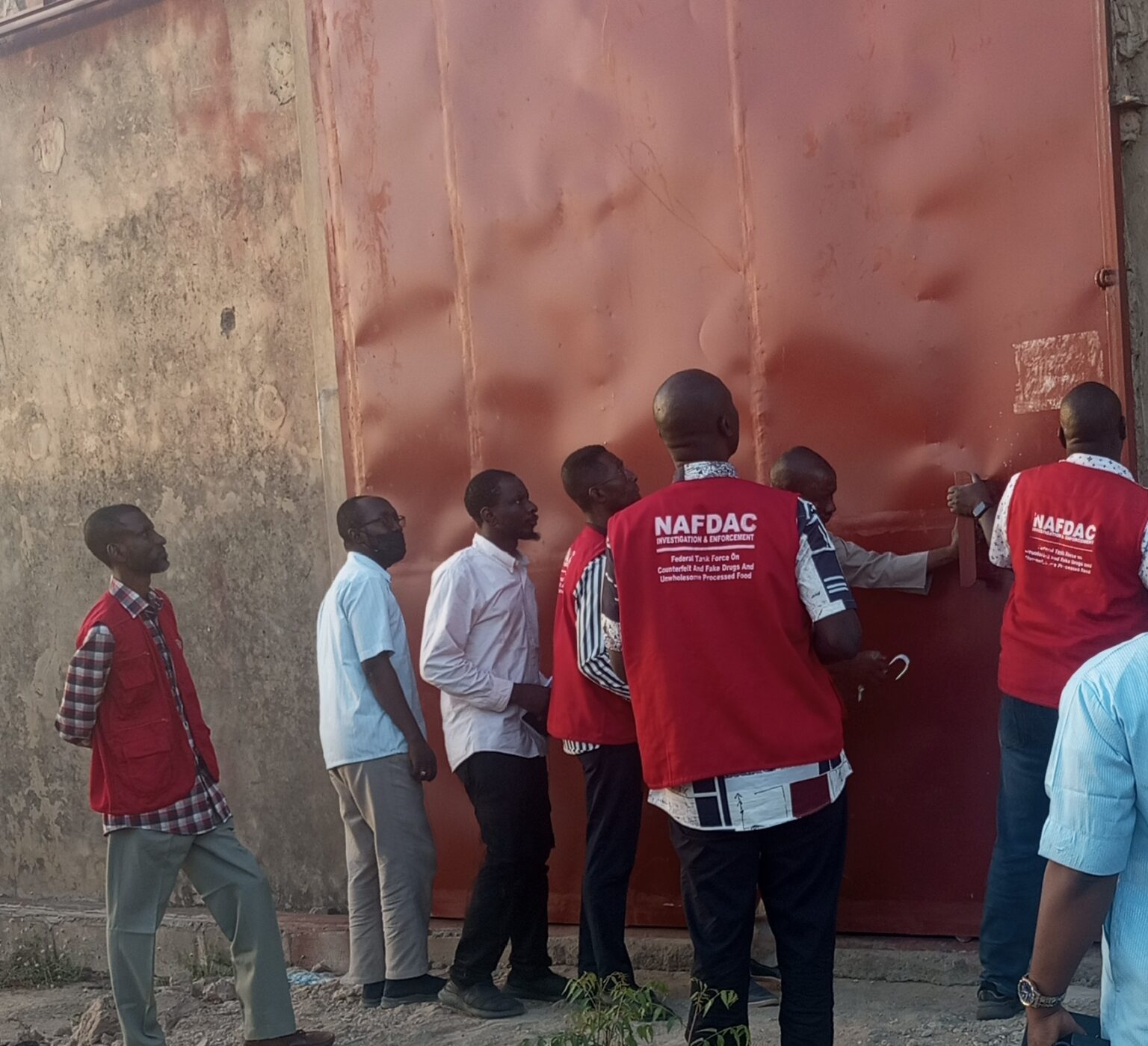
The National Agency for Food and Drug Administration and Control (NAFDAC) has sealed four warehouses and seized prohibited chemicals worth approximately N560 million in Kano State, arresting two people over the alleged illegal storage, distribution and sale of banned substances.
Also read: NAFDAC Warns Imo Drug Dealers Over Fake, Expired Drugs
The agency’s Deputy Director of Investigation and Enforcement, Mr Emmanuel Andrew, disclosed this on Thursday, November 12, 2026, during an enforcement operation across parts of Kano metropolis.
Andrew said the operation was part of efforts to enforce Nigeria’s ban on Paraquat-based herbicides, including products marketed under the name Paraeforce, while preventing the circulation of other prohibited and unregistered chemicals.
He described the discovery as alarming, given the potential consequences of exposing farmers, traders and members of the public to highly toxic substances.
According to him, NAFDAC inspectors visited more than 10 warehouses and other premises during the operation, uncovering suspected illegal stocks, chemical processing materials and products allegedly stored for unauthorised distribution.
The enforcement exercise resulted in the sealing of four warehouses, with two individuals arrested, including the owner of a facility where thousands of cartons of prohibited herbicides were discovered.
Andrew explained that NAFDAC initiated the phase-out of Paraquat following a review of its safety profile in 2020.
The agency subsequently announced that imports would stop by December 31, 2022, while the remaining stock was to be exhausted during 2023.
Full enforcement of the ban commenced on January 1, 2024.
The latest operation demonstrates the continuing challenge of removing prohibited agrochemicals from commercial circulation despite the regulatory restrictions.
At Panisau, inspectors sealed a warehouse after discovering controlled chemicals suspected of being used in the production of illicit drugs.
Another property at Jaba was also sealed over allegations that it was being used for the illegal manufacturing and repackaging of chemicals.
Andrew said investigators recovered cartons of chemicals allegedly sourced from a company in Lagos and Niger Republic, alongside a sealing machine and other packaging materials believed to have been used in the operation.
He warned that enforcement activities would continue until the illegal stocks were removed and the investigation into those responsible was completed.
The operation also uncovered 2,983 cartons of Paraeforce products valued at more than N200 million in another warehouse, leading to the arrest of two suspects.
In a separate facility, inspectors discovered more than 8,000 cartons of Crownquat, another Paraquat-based product containing 2.76 grammes of Paraquat dichloride, with an estimated value exceeding N360 million.
The warehouse also contained Chlopyrifos, identified by the agency as another prohibited product.
“The warehouses have been sealed. The agency will invite the owners for further investigation,” Andrew said.
The two major consignments of Paraquat-based products accounted for the reported N560 million seizure value, although the agency also recovered other materials during the operation.
NAFDAC further seized 183 cartons of unregistered Dynewell syrup imported from Ghana. The products were discovered in an uncompleted building in the Sharada area of Kano metropolis.
Andrew urged Nigerians to avoid buying, selling or using prohibited chemicals, warning that exposure to Paraquat could have fatal consequences.
He said there was no known antidote for Paraquat poisoning and assured the public that the agency would sustain its enforcement operations to protect human health and the environment.
The health concerns surrounding Paraquat extend beyond its immediate toxicity.
According to the United States Centres for Disease Control and Prevention (CDC), swallowing the chemical can cause severe damage to the lungs, kidneys, liver and heart, with serious poisoning potentially resulting in respiratory failure and death.
The CDC also states that no proven antidote or cure exists for Paraquat poisoning, making prevention and immediate medical attention particularly important following suspected exposure.
There are also scientific concerns about possible links between Paraquat exposure and Parkinson’s disease.
Research reviewed by the National Institute of Environmental Health Sciences has identified Paraquat among pesticides associated with the onset and progression of the neurological condition, although the precise causal relationship remains a subject of scientific investigation.
NAFDAC’s enforcement campaign follows a regulatory timetable announced in October 2022, when the agency outlined a four-year phase-out process for Paraquat and Atrazine because of their potential risks to public health and the environment.
Under the arrangement, Paraquat imports were to stop by December 2022, with a further 12-month period allowed for existing stocks to be exhausted before enforcement commenced in January 2024.
However, the continued discovery of prohibited products highlights the difficulties of enforcing chemical regulations across Nigeria’s extensive agricultural supply chains.
An investigation published by the Organised Crime and Corruption Reporting Project (OCCRP) in 2025 reported that 37 shipments of Paraquat and Atrazine had arrived at major Nigerian ports in 2024, despite the restrictions.
The investigation also reported that NAFDAC had permitted some delayed shipments to enter under conditions that their products would be exhausted within the designated moratorium period.
The findings raised questions about import controls and the effectiveness of enforcement against large-scale distributors.
The latest Kano operation therefore represents another significant effort to disrupt the circulation of hazardous agricultural chemicals and hold those involved in their unauthorised distribution accountable.
For farmers, agricultural retailers and consumers, the agency’s warning reinforces the importance of checking the regulatory status of agrochemical products before purchasing or using them.
Also read: NAFDAC Destroys N8bn in Fake, Banned Products in North-Central
NAFDAC has maintained that it will continue its nationwide enforcement activities to prevent prohibited substances from reaching the market and reduce the risks posed to public health, food safety and the environment.




Pingback: NAFDAC Destroys N22.73bn Unsafe Products in Eight Months – FreshUpdates News